

Why we built The Foundry
Not to 'add AI' for the sake of it but to help businesses get
to the point where AI actually helps them.
We didn't start out building AI tools
We arrived here by sitting with business owners who kept saying the same things.
"If I don't do it, it doesn't happen."
"Everything still comes through me."
"I don't have a PA — so this business doesn't have a PA."
These were good businesses. Busy. Profitable.
But everything important still relied on a small number of people remembering, chasing, checking and stepping in. Monday mornings disappeared into email. Evenings were spent catching up because that was the only way things kept moving.
AI was meant to help with this stuff. The admin, the inbox, the follow-ups, the things that kept dragging people back into the detail. On paper, it made sense. People experimented. Some things were quicker.
But the pressure stayed in the same place.
The same people were still the bottleneck. The same things still slipped if someone didn't notice them in time. The reason was simple.
Work lived in people's heads. Processes weren't written down because it felt quicker not to. 'Standard' wasn't actually standard, it changed depending on who was doing the work or how busy things were that day.
In that setup, AI can't take weight off, it just gives you more to check.
It can't decide what matters if the business itself hasn't decided that first.
Then AI arrived and everyone thought it was the solution
That's when it stopped being an AI problem
The real problem was simpler and harder.
The business hadn't been made clear enough to hand work over. To another person or to a machine. Without everything snapping back to the same few people.
Once we saw that, we couldn't unsee it.
So we built The Foundry around that exact problem.
Not around tools. Not around automation for its own sake. But around helping businesses do the hard bit first, making their work clear enough to explain, repeat and share.
When that's done, AI earns its place.
Quietly. In the background.
It doesn't replace judgement. It doesn't flatten personality. It just carries the load that shouldn't need a human brain attached to it.
When it works
The change isn't dramatic.
There are fewer late nights. Fewer things that only one person can do.
Less firefighting. Less fear about what's being missed when someone's away.
The business still feels human, it just feels lighter to run.
We didn't create this to make businesses more advanced but because too many good businesses are heavier than they need to be, and used properly, AI should make things lighter, not louder.
The founders
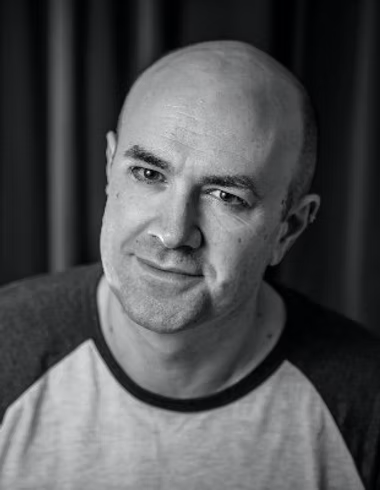
Andrew Seel
Andrew Seel is a co-founder of The Foundry. He's good at spotting when systems stop working for the people using them — and figuring out how to fix that. His focus is on making work easier, getting more people involved, and building businesses that don't fall apart when one key person takes a holiday.
Andy's real skill is in the early thinking. He shapes products, platforms, and programmes by looking at the whole picture: the people, how they actually behave, what motivates them, the context they're working in, and the small, often invisible friction that causes good ideas to fail in practice. He's human-centred, but not in a fluffy way — more in a practical one. If something doesn't work for real people under real pressure, it doesn't work.
That's also why his approach to AI is grounded. Andy isn't chasing AI for its own sake. He's interested in whether AI is being added to something that already makes sense — and whether it actually makes things easier, rather than just speeding up the mess.
At The Foundry, Andy focuses on clarity: making sure what's designed is coherent, usable, and robust. He wants tools that support people rather than replacing their judgement with templates. The goal is simple: a business that feels lighter to run, and doesn't wobble when one person steps away.
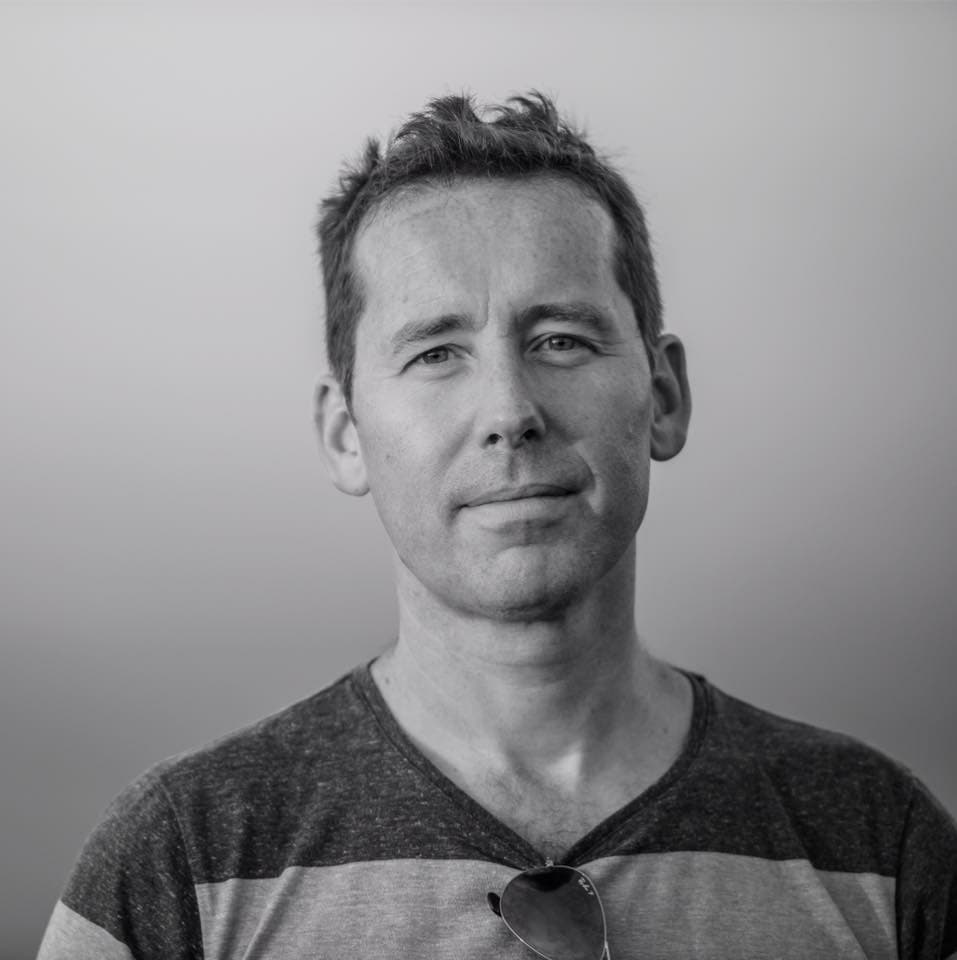
Nigel Cooper
Nigel Cooper is a co-founder of The Foundry. He helps businesses reduce day-to-day pressure by making work easier to understand, repeat, and pass on to others.
Nigel's background is a bit unusual, but it's useful for this work. He's spent years doing two quite different things that both require careful judgement. One is writing literary fiction — character-driven stories focused on psychological honesty and what's left unsaid. The other is building real systems: designing and shipping tools that take messy, human reality and turn it into something usable and reliable.
That combination shapes how he thinks about AI. Nigel isn't interested in AI as a novelty or a way to look impressive. He's interested in whether it actually makes a business clearer and calmer to run — and whether the important knowledge, decisions, and language inside a company can be captured and reused without flattening the people involved.
At The Foundry, Nigel focuses on understanding how work really flows inside a business, then building systems and AI-supported tools that cut duplication, clear bottlenecks, and reduce reliance on a few key people. His bias is always toward what's useful, what's true, and what genuinely takes pressure off — not solutions that just sound good on paper.
Our experience with global brands
Over 25 years, Nigel and Andrew have worked with leading global organisations.











Start a conversation
Want to understand whether this approach fits your business?
The best place to start is a conversation.
No pitch. No obligation.